Call for Papers
Important Dates
| Events | Dates |
|---|---|
| Abstract submission deadline | |
| Paper (long and short) Deadline | |
| Paper (long and short) Notification | |
| Poster Deadline: | |
| Poster Notification: | |
| Camera-ready Version (papers and posters): | |
| Contest Deadline: | |
| PhD School: | Mon August 17 – Tue August 18, 2026 |
| Symposium: | Wed August 19 – Fri August 21, 2026 |
Call for Papers
Graph Drawing is concerned with the geometric representation of graphs and constitutes the algorithmic core of Network Visualization. Graph Drawing and Network Visualization are motivated by applications for which it is crucial to visually analyze and interact with relational datasets. Application areas include data science, social sciences, web computing, information systems, life sciences, geography, business intelligence, information security, and software engineering.
Graph Drawing has been the main annual conference in this area for more than 30 years. Its focus is on combinatorial and algorithmic aspects of graph drawing, their experimental evaluation, as well as the design of network visualization systems and interfaces. Researchers and practitioners working on any aspects of graph drawing and network visualization are invited to contribute papers and posters and to participate in the symposium as well as the graph drawing contest.
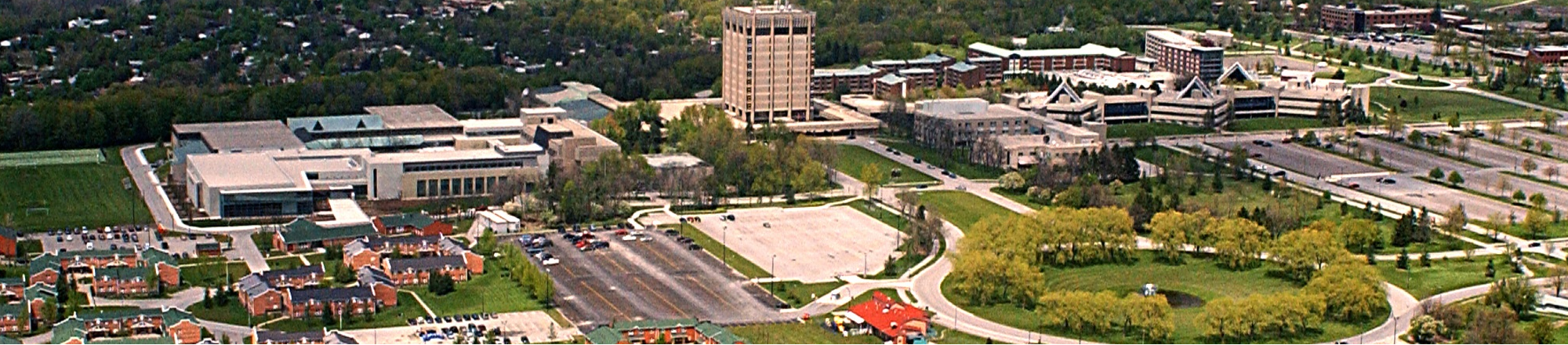
GD 2026 will be held at Brock University in St. Catharines, Canada, from August 17-21, 2026. A PhD school will take place August 17-18, 2026, followed by a reception on the evening of August 18. GD 2026 is designed to be held on-site. It is expected that regular papers are presented on site by one of the authors. To address global challenges and as an offer for authors who are unable to attend, we allow for a limited number of remote presentations, as further explained below.
The code of conduct for the GD conference can be found at http://graphdrawing.org/safetoc.html
Tracks
We invite authors to submit work describing original research of theoretical or practical significance to graph drawing and network visualization. To promote a balanced coverage of the field, GD has two distinct tracks, and contributions submitted to one track will not compete with contributions submitted to the other track.
Track 1: Combinatorial and algorithmic aspects
This track is mainly devoted to fundamental theoretical graph drawing advances, such as combinatorial and algorithmic aspects. We aim at covering a diverse set of topics, which for this track includes (but is not limited to):
- Design and analysis of graph drawing algorithms
- Geometric and topological graph theory
- Computational topology of graphs on surfaces
- Graph representations
- Geometric advances and computing in graph drawing
- Combinatorics and optimization in graph drawing
Track 2: Experimental, applied, and network visualization aspects
This track is mainly devoted to conceptual and applied aspects of network visualization in the scope of graph drawing, such as experimental evaluations of graph drawing and network visualization related algorithms, the development and/or evaluation of related libraries and tools, or systems and interfaces in different application areas. We aim at covering a diverse set of topics, which for this track includes (but is not limited to):
- Engineering of graph drawing algorithms and network visualization approaches
- Interfaces, methods, and high-quality tools for interacting with graphs and networks
- Benchmarks and experimental studies in the context of graph drawing and network visualization
- Cognitive studies on network visualization aesthetics and user interaction
- Visualization of networks in real-world applications
- Machine learning methods in graph drawing and network visualization
- Graph drawing & network visualization for AI explainability and trustworthiness
Contribution Types
Perpendicular to the tracks, GD supports three contribution types, as well as a contest.
Long Papers
The standard contribution type is a long paper that describes relevant and original research in full detail. Accepted papers in this category will be assigned a standard time slot for presentation during the conference.
Short Papers
In addition to long papers, there will be a separate category for short papers. Here, we welcome smaller and less extensive contributions on relevant topics. Accepted papers in this category will be assigned a shorter time for presentation during the conference.
Short papers undergo the same competitive selection process as long papers.
Posters
Finally, we also solicit poster submissions. Accepted posters will be presented in the poster session, and will provide a forum for the communication of late-breaking research results (which may also appear elsewhere) to the GD community.
Contest
The traditional Graph Drawing Contest is held before and during the conference. Details are provided at the website. Winning submissions will be invited by the contest committee to submit a contest contribution, which will appear in the proceedings.
Submission Format
The proceedings will be published in the open-access LIPIcs series. To facilitate the process, submissions have to be prepared in accordance with the LIPIcs author instructions. The page provides links to the LIPIcs class file along with an example and detailed author instructions. For the submission, the use of the LaTeX class file gd-lipics-v3.cls is requested. The class file is a wrapper around the standard LIPIcs class and implements line counting, see CG-linecount.pdf for details, as well as additional macros. Please use the \category macro to specify the track and contribution type, and use the macros \GAIDecl and \USEDecl to include your generative AI declaration and/or user study ethics declaration. These will be formatted as part of the front matter, and not count towards your line limit. Submissions must not exceed the following limits:
- 500 lines for long papers,
- 250 lines for short papers,
- 80 lines for poster abstracts,
- 100 lines for contest contributions (by invitation only).
The above limits do not include front matter (title, authors, affiliations, classification, etc.), acknowledgements, references, or appendices. The class files provide line counting which should be accurate in most cases. Authors should avoid substantial amounts of text in unnumbered lines.
Accepted papers will have additional space to facilitate incorporating reviewer comments.
The claims of long and short papers should be fully substantiated. If this information does not fit within the line limit, the authors should include it in a clearly marked appendix, whose length is not constrained and which the reviewers may read at their own discretion. For poster submissions, no appendix is expected.
We also encourage authors to avoid “et al.” in citations in favor of an equal mention of the surnames of all authors. For references with few authors, it is recommended to name all of them; if the number of authors is large, consider writing “(It is shown that) X [#]” or “The authors in [#] show that X” instead of “A et al. [#] show that X”.
Submission Process
Papers should be submitted electronically via Easychair.
Authors of posters should prepare an abstract that must be submitted together with the poster itself. Each submission will thus consist of two pdf files (the abstract and the poster).
Selected papers from Track 1 and Track 2 will be invited for submission to a special issue of the Journal of Graph Algorithms and Applications (JGAA). The authors of two selected papers in Track 2 will be invited to submit a substantially extended and enhanced version of their work to IEEE Transactions on Visualization and Computer Graphics (TVCG). A special TVCG papers session at the Graph Drawing conference will also feature regular TVCG papers. Further details can be found at https://www.computer.org/digital-library/journals/tvcg/tvcg-partners-with-conferences
Policies
GD implements a number of policies.
AI policy
Authors are not prohibited from using generative AI (GAI), but are required to be transparent about its use and are responsible for complying with all relevant policies. PC members are prohibited from using GAI during the review process, because submitted manuscripts are confidential and may not be shared with AI platforms.
The full AI policy can be found at http://graphdrawing.org/ai.html
User Study Ethics policy If a paper makes use of data from human subjects, the collection and use of such data should have been conducted carefully and should adhere to ethical standards for responsible research practice, as well as data protection regulations.
The full ethics policy can be found at http://graphdrawing.org/userstudies.html
Code of conduct GD is dedicated to providing an environment that is free from harassment, bullying, discrimination, and retaliation for all participants, regardless of gender, gender identity and expression, age, sexual orientation, disability, physical appearance, body size, race, ethnicity, religion (or lack thereof), or technology choices.
The full code of conduct can be found at http://graphdrawing.org/safetoc.html
MISC TOPICS
Lightweight Double-Blind Review Process The review process of long and short papers will be handled in a lightweight double-blind mode. This means that authors are not allowed to reveal their identity in the submitted paper, but are free to disseminate draft versions of the paper prior to the conference and to give talks on the topic as they normally would. In particular, the submitted paper should not contain the authors’ names, affiliations, and email addresses. References to their own related work are allowed, as long as the supporting text maintains anonymity (e.g., using sentences in the third person). Members of the Program Committee will not have the identity of the authors of any paper revealed to them during the entire review process. To handle conflicts of interest effectively, authors will be required to declare conflicts of interest with PC members when they submit their paper.
Poster submissions will be evaluated by the Program Committee in a single-blind mode. In particular, the submitted abstract should contain the authors’ names, affiliations, and email addresses.
Awards
For each of the two tracks, the Program Committee of GD 2026 will bestow a Best Paper Award. In addition, to recognize the effort of participants to present their work and to prepare their posters in a clear and elegant way, there will be a Best Presentation Award and a Best Poster Award voted on by the GD 2026 attendees. Finally, there will be awards for the best submissions in the Graph Drawing Contest, decided independently by the Contest Committee.
Remote Presentation
GD 2026 is an in-person meeting. Authors of accepted papers are expected to present their results at the conference. For people who for legitimate reasons cannot participate in person we offer the possibility for remote presentation. To this end, authors may indicate their preference for a remote presentation at the time of submitting their article. Such papers are evaluated and selected by the program committee by applying the same high standards as for the other papers. There is a limit of at most four remote presentations. In case of more requests, decisions may depend on the validity of the reasons mentioned. In all cases, an author of each remote presentation has to register for the conference.
Rules for Submission
Results that have been previously published (or are scheduled for publication) in another conference proceedings or journal, as well as simultaneous submissions of results to other conferences with published proceedings or journals are not permitted, except for poster submissions. With the exception of remote presentations, each paper or poster must be presented at the conference by an author, otherwise the paper can be excluded from publication in the proceedings.